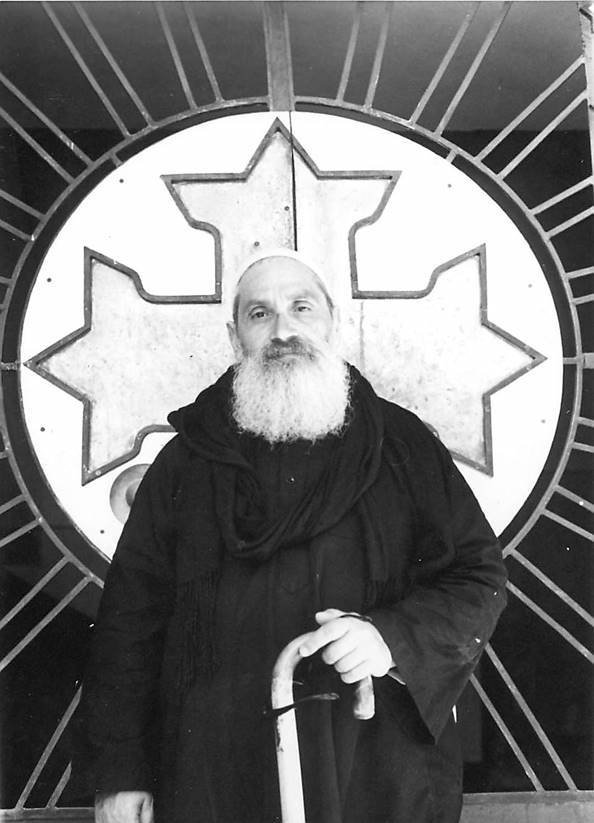
By Fr. Matthew the Poor (+2006) – Former Abbot of St Macarius Monastery
The various kinds of asceticism, such as fasting, silence, and constant vigilance, are vital for a life of prayer. They mortify the lust of the Adamic life and the will to sin, which are embedded within our members. We have already gained the right to die to the life of this world—in baptism. We died to our Adamism to receive our Christian life. It comes to us as a free gift of redemption, since Christ has died in our place.
So if we practice a life of asceticism and austerity, it is only as an extension of the death-to-the-world process begun at baptism. Nevertheless, important as this mortification is, it has to be handled with some care. For this reason, we will note down at the outset a few guidelines for the practice of asceticism. This we will do to safeguard our asceticism from any distortion that might lure us away from the right path.
1. We should not see austerity, or asceticism, as an end in itself. Neither should we delight in practicing it to the exclusion of everything else. By doing so we are only allowing it to distract us from progressing toward God and completing our union with him in mature love.
2. Ascetic disciplines are nothing more than the means to mortify the old Adam and crucify our will, our passions, and the desires that work in us for iniquity. Ascesis is only a way of showing our love and tender feelings toward God.
3. Perseverance in practicing the kinds of austerities after being renewed and filled with grace serves only to counter the tendency to hanker after what the world offers. It helps to restrain the will from inclining toward sin.
4. If we make progress in such a discipline, this should not become a matter of pride. If it does, we will open ourselves up to the spirit of self-righteousness. This will immediately arrest our spiritual growth.
5. The most austere asceticism can never erase even a single sin. It cannot atone for the slightest transgression we may have committed. Such is the case if that austerity is devoid of love toward God or of the intercession of free grace. For this is only attainable by the blood of Christ.
6. Our asceticism should not be so severe as to be cruel to our own body. It should not prevent us from performing the daily tasks of life actively.
7. Our attention should be inwardly focused upon the will, which drives us to lust and sin. This perverse will of ours craves for what belongs to it. All its aims terminate at one point: the ego. The ego is our enemy. We have to struggle against it with our fasts and vigils until it dies completely. It is only then that we will possess the new will, which carries out the will of God alone.
8. Asceticism should not assume the form of a bodily suppression or repression. For once the practice of ascesis disappears, the result is an acute reaction. Man returns to his former state or even to a more depraved one. Asceticism should be soberly and wisely practiced, not out of grief or pain but in joy and happiness. The limits of the ascetic life should be set by the guidance of a prudent spiritual father. Those who practice it should not underreach or overreach the limits of their abilities. Otherwise, the practice may cease altogether, in which case the ascetic life will lose its desired fruit. Ascetic discipline should begin below the level of one’s ability. It should then ascend and grow until it turns into a natural personal quality that forms a major part of one’s way of life.
9. If ascetic discipline is devoid of love and joy in the Lord, it turns into a source of depression, sullenness, and perturbation. It may also be a cause of pride and self-righteousness.
10. Many are those who have struggled and freed themselves from the world by the most severe austerities. However, since they did not submit themselves to the hand of God and the work of grace in lowliness and humility, they have gone astray. If we are freed from the world, we must also be freed from ourselves, so that God can take us and shape us freely.
Fr. Matthew the Poor,. Orthodox Prayer Life: The Interior Way (pp. 120-122). Saint Vladimir’s Seminary Press.
 Orthodoxy is Life